All too often teams find themselves awash in work, not knowing how they got there. They receive direction from leaders, yet feel strong doubt, disbelief and skepticism. They feel their effort is wasted, being fed with requests that often sound cool, but ultimately are utterly untethered and unrealistic. The teams’ methods for pushing back and asking for clarity or decisions are drowned in competing narratives across leadership, who themselves don’t share common delivery goals. Indeed, in worst case scenarios ties to schedule or other necessities of business are portrayed as getting in the way of quality.
Teams therefore wind up in a vicious cycle of “I’ll know it when I see it” directives, with leadership conflict pulling them this way and that. All the team can hear is “I’ll know it when I see it,” with no indication of what “having a good delivery” or “doing a good job” even means.
If only there was a way to channel that energy, turning a team’s effort into steadily improving delivery and allowing a business to reap reliable results, constantly.
It’s oddly comforting for me to remember that this is an age-old problem. Indeed, one of the things that attracts me to Chinese philosophy and history is that the focus is often on this leadership subject. Looking into it, you can’t escape one word that appears over and over, in various configurations and conjunctions: 治. Pronounced “zhi” (try “jur,” like “jar” but short ‘u’ sound). It’s so ubiquitous that translations often gloss over it, choosing easier words, but losing the deep references and leadership advice.
The Big Idea
One of my favorite statements on the topic: 以治為勝 (yi zhi wei sheng) from the Wu Zi Art of War.
The sovereign asks “What does the army depend on for victory?” Wu makes his simple, confident statement. “Apply zhi for victory.” (以治為勝) Or, “channel your way to victory.”
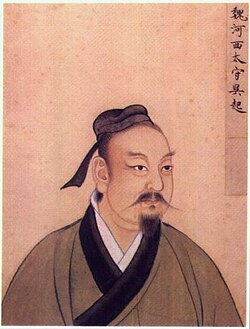
The elegant and deep admonition is usually lost because zhi / 治 is translated simply as administration / governance / organization. That one little word, 治, in fact does a lot more heavy lifting. For my own principles and practices, ancient legends and words ring out from Wu Zi’s direct counsel. By piecing together the metaphorical potential of “zhi” with it’s historical roots, I find a methodology to achieve victory for myself and with my teams.
治 (zhi) has a striking significance that implies an ongoing endeavor of guidance in ever-changing circumstances, yet never requiring total control – neither immediate, nor in the long term. Nevertheless, by understanding the nature of the circumstances of the moment, one can steer the course, having lasting impact. That’s because 治 (zhi) has it’s root in ancient tales of controlling devastating floods of ancient China, a regular national bane. The principle implies that just like with water’s flow, so go the flow of events – in individuals, nations, and businesses.
Of course we cannot control events, but through diligence, attentiveness, valuing people and cooperation, we can channel their flow. We can bring safety, security and prosperity not only to a team, but also to the business at hand (whether individuals’ success, nation building, or just plain commerce). The opposite, the Un-zhi (治), sets us all at odds, letting chaos overflow and situations simply unfold. Without foresight, the un-zhi shows up as an “I’ll know it when I see it” approach, allowing teams to flounder because they have no guide. No channel. No shared purpose. The un-zhi seems to imagine that “good” is impossible to imagine or design beforehand. When this happens teams are at odds, adrift in the overwhelming flood of swirling possibilities and activities, ultimately exhausted by presenting option after option, never reaching a successful conclusion. Indeed, “success” was not outlined at the start, so the swirl is preordained.
On the other hand, 治 (zhi) is “go with the flow” in it’s deepest sense. 治 (zhi) implies that by understanding the nature of water, and events, one should not combat that flow with short term struggles, swimming against the current. Instead, one can establish fundamentals which allow teams to engage individually and independently, but cohesively.
By digging channels of shared goals and common understandings, plus building bulwarks through declarations and examples of acceptable behaviors, leaders can thereby build shared culture. Cultivated teams can rally great efforts which ultimately benefit individuals, teams, and the business. Using “zhi” (治) promises better results by channeling effort, rather than letting it spill out in all directions. It’s the difference between struggling and drowning in raging floodwaters versus aqueducts, irrigation, aquaculture, recreational lakes and pools.
Many of the most important principles in life are easy to say, but difficult to practice. For example, want to lose weight? “Eat less, exercise more.” The same is true with “apply治 for victory.”
Putting it to work
The practices I attempt are two fold. The first is to shift teams and events fundamentally, at something of a tectonic level (and pace). The second is more direct, and highly depends on the circumstances at hand – most importantly depending on the leadership’s appetite for change and dedication to improvement.
As one simple example of slow-paced, fundamental changes, take performance understanding and assessment. Due to the rhythm of appraisals in most companies, establishing new criteria for performance management can take years. After all, they are usually annual reviews. Still, I put great stock in getting the criteria and the routines right. A competency or skills matrix can be a channel that guides behaviors, developing positive culture. Through them, everyone knows what is expected. Teams come to know who can learn and teach. They can also police themselves, providing direct feedback from a shared resource, which removes fear. In cases of poor performance, action can be taken quickly and cleanly because success is actively outlined. Therefore, an individual’s variance from expectations is readily pointed out and after suitable time for personal improvement, can be actioned.
Too often fundamental channels like these become check-box activities that aren’t respected or applied, leaving team members to flounder every day. Instead of referring to a common understanding, they constantly attempt to read the writing that leadership is putting on the wall, and each individual has a differing interpretation. How can chaotic activity not result?
When that is the case, leaders should take direct, immediate action to reinforce the channel with common touchpoints to reinforce the commonality of the shared understanding. For example, institute quarterly or monthly performance conversations based on the established guides. In basic situations like this, the softly-softly approach might also provide coaching and mentorship individually.

I’m not talking about performance management alone, but also delivery management. When one “applies zhi,” one sets out quality goals and experiential designs which the team can seek to attain independently, but cohesively. With goals and designs in hand, they can propose solutions and present methods to attain them. Guidance then becomes a light touch, flowing towards a targeted aim. Effort in this case is like water flowing through a hydro electric dam, turning turbines, where the business result (electricity) is constant and almost a bi-product of the water.
On the other hand, when leadership uncertainty turns into competing narratives, the business quickly finds it difficult to perform. For example, projects become chronically late and over budget. Instead of contributing effort towards a shared, clear goal (i.e. the “zhi” method – channeled effort), teams instead spend time parsing competing leadership signals. Prioritization becomes unreliable, relying on “show me more” practices, leading to disappointment because “more” is not necessarily “better.” Exhaustion sets in, making the situation a vicious cycle: poor goals, lead to poor deliveries, which demand more work, which leads to fatigue, which leads to even poorer deliveries, all of which consumes more and more time. Unlike the hydropower metaphor above, here we have a flood, where the dyke has burst and effort simply wastes itself across the landscape, leaving tired people and a ruined project.
In these times, leaders must take immediate corrective measures. The costs of allowing ongoing doubt, disbelief, skepticism, and mistrust is too great. Beyond coaching and mentoring, correction means quarantining or removing the source of the uncertainty. The absolute worst is when incertitude is actively leveraged, whether by an individual or a cabal. Here uncertainty is used as a cover to achieve aims that are individually oriented. The “I” in “I’ll know it when I see it.” The dykes of shared understandings are left neglected and channels of common aims subverted. In that case, no matter how talented a team member might be, the cost to culture in misgivings, disbelief, suspicion, incredulity, warrants dismissal.

Symptoms of this kind of behavior can be recognized. Chief among them is equivocation: a way of speaking or acting that is intentionally not clear and is confusing, especially to hide the truth. It is deliberate evasiveness through use of ambiguous language. For example, listen to pronouns. Do some leaders regularly refer to “the team” as if it is a monolith, with no variation. “The team feels…” or “The team thinks…” while including neither specific team members nor sources like team-wide surveys? Another example, “the community” or “players,” as in “our community will feel…” or “the players will not like….” It can even be simpler. The all inclusive “they” or even “we,” often used to draw lines to identify allies or opponents. The subtext is “I have the right answer, look at all these [insert pronoun] that agree with me.” Yet, it is not at all The Truth. Teams and players have many thoughts and feelings, with many reasons for them. Leaders who resort to this kind of ambiguity are often simply pursuing their own agenda, instead of creating a shared one. This is why immediate corrective action is paramount to the team and to business success.
Of course, these are simple examples of age-old problems. Indeed, the Wu Zi chapter that starts with 以治為勝 (apply zhi for victory) goes on to list the importance of clear guidance using rewards and punishments, yet describing how to use 治 (zhi) to achieve good culture, ultimately resulting in “father-son,” filial leadership of the soldiery (Wu Zi, Managing Troops, verse 2).
So, are my principles and practices taken just from the Wu Zi Art of War? No. 治 is a deep, meaningful and ancient word, ripe with meaning. As already mentioned, much of Chinese history and philosophy is dedicated to researching and applying these kinds of principles. I’d love to hear your thoughts, so let me lay mine out for you.
First glance: too easy
Look up 治 in a dictionary, and the depth of the word is obvious. In the context of military and governmental treatises, it typically translates “organize,” or “administer.” As mentioned above, Wu Zi leaned into that direction. However, the dictionary also points to many divergent applications.
- Rule, administer (a nation, all under heaven): 治國 (zhi guo), 治天下 (zhi tian xia)
- Governance, government: 政治 (zheng zhi)
- Punish: 治罪 (zhi zui)
- Research: 治學 (zhi xue)
- Cure: 治病 (zhi bing)
- Bring peace (to a people, a land): 治世 (zhi shi), 長治久安 (chang zhi jiu an; “long ‘zhi’ lasting peace)
- Manage property, finances: 治產 (zhi chan)
- Clear, clean, unclog, and “control” (especially in waterways): 治水
How can a single word stretch from rule and governance to punish to cure to bring peace or…unclogging and cleaning?
Turns out, that last one of cleaning, unclogging is perhaps the most important when taking Wu Zi’s advice to “channel your way to victory.” It is the root metaphor, transmitting deep cultural and philosophical values rooted in pre-history.
Deeper look: etymology
Focusing on the word治 (zhi)itself, it is made up of the three-dot water radical (氵) and “tai” (台), which generally means “platform,” the simplified version of 臺 (“tai.”) (“simplified” here does not mean “modern simplified Chinese.” The simplification is an old one!) However, “tai” etymology is also deep.
“Zhi” through the millennia…
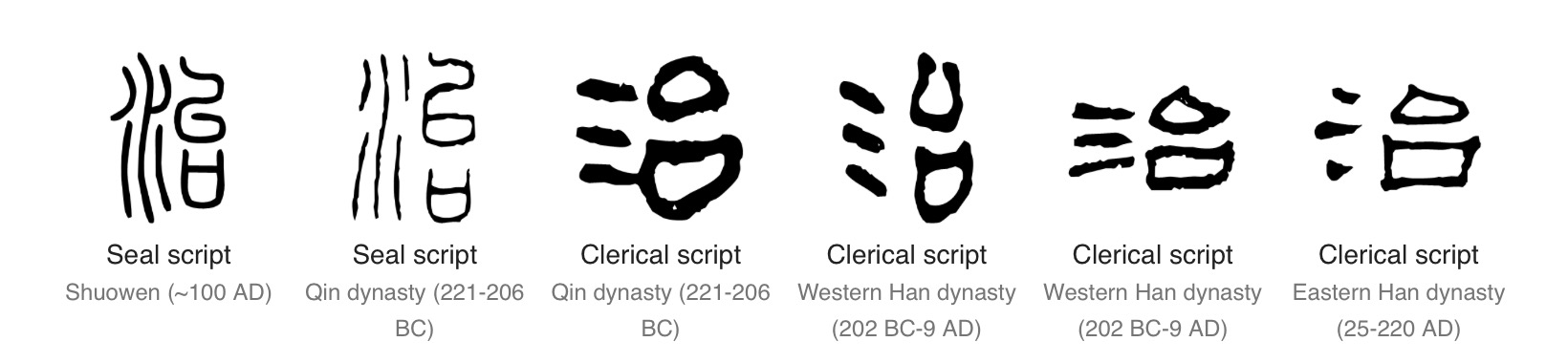
“Tai” is among the oldest of Chinese words, and can be found in the oracle bone scripts dating back to at least 1200s BCE.
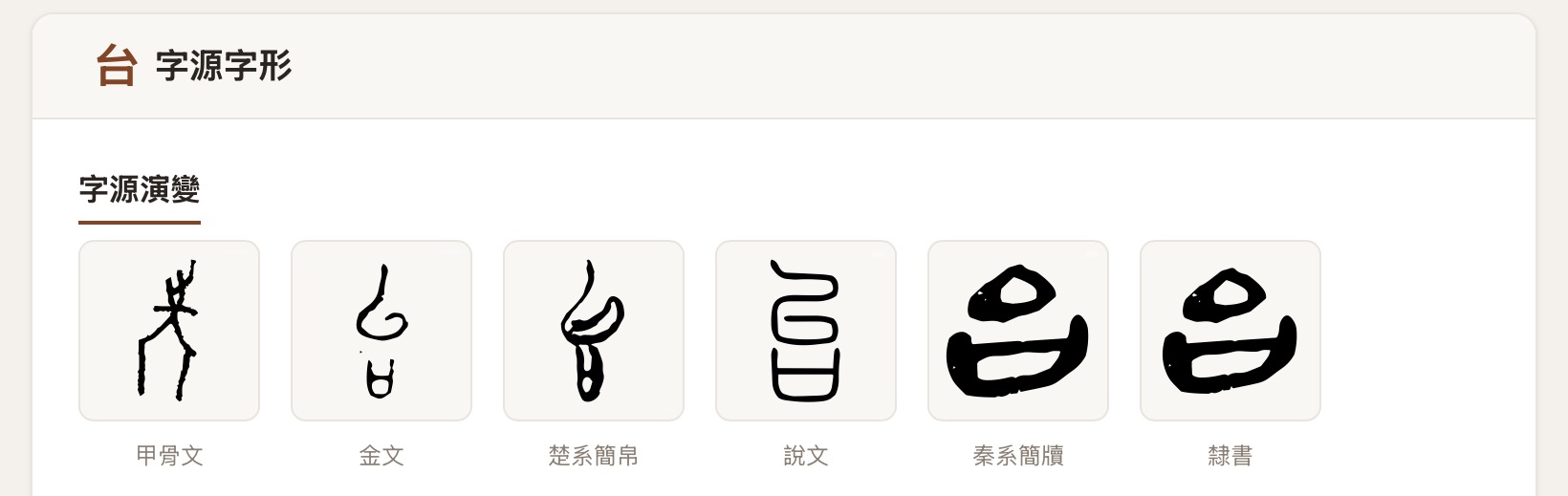
| Oracle bones | Bronze script | Chu silk script | Shuo Wen Dictionary | Qin & Clerical scripts |
Many modern speakers might recognize it as a form of the pronoun “I”, or also meaning “speak, speech.” This makes sense figuratively and literally because the pictogram is of a mouth, and the breath (i.e. words) coming out of it. In histories, the meaning and association are important to my principles and practices. In the Shang Shu (尚书), for example: “舜讓于德不台 (“(emperor) Shun yielded to virtue without a word” (or “without being flattered”). Similarly, “古文禹貢:祇台德先”(“In ancient texts (emperor) Yu: only spoke Virtue”).
“Speaking” in both these stories must include “expressing,” “interacting,” “influencing,” especially when considering Shun and his legends of attracting followers, settling disputes, improving craftsmanship and so on. Likewise for Yu, who exerted much effort himself, but also brought everyone together in order to “organized the waters” (治水,zhi shui) and fight flooding.
Guide the flow (don’t just go with it)
The original word “zhi,” according to the ancient “Shuo Wen” dictionary, was merely a river in Shandong. And yet it’s use has become wide-spread and wide-meaning.

“Shuo wen” 11th scroll, “water” radical: Water/River. Flows from Yanqiu mountain in Qucheng, flows into the sea in the south
For my own principle and practices, the ancient legends and words ring out. Sure, from Wu Zi’s direct counsel, but also from a wealth of other practitioners who were also wrestling with the problems we still see today. So, let’s take a look at those examples, and consider further examples of how we can “channel our way to victory”
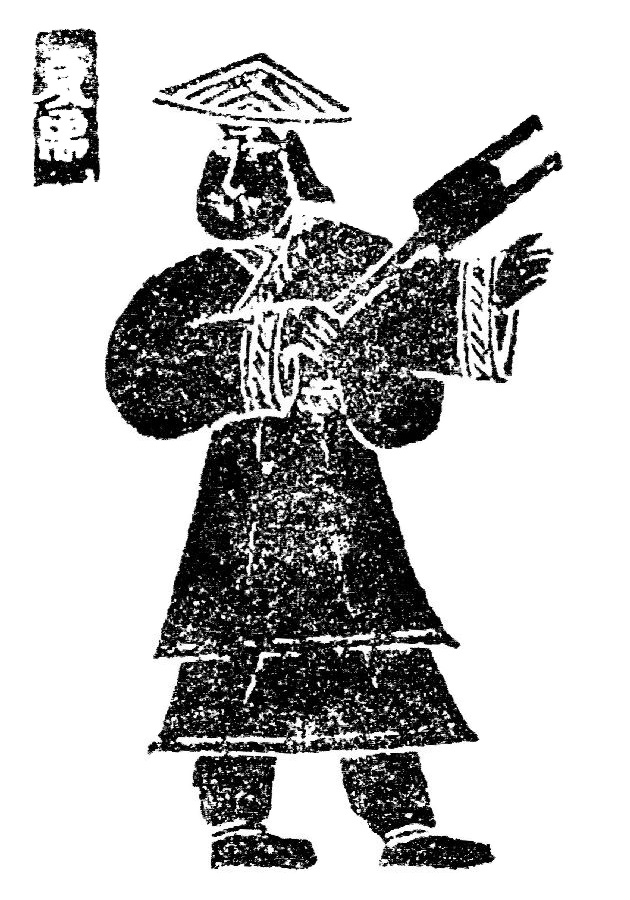
The uttermost example is Yu the Great and controlling the floods (seen below, with his shovel). His work might be apocryphal and legendary, but the cultural impact is undeniable. His example is literally quoted across the entirety of 5,000 years of Chinese history, first mentioned around 2100s BCE all the way to today. His ideal of hard work and focus lives, including details of losing his shoe and not stopping his work of rallying people to build bulwarks and solve the flooding, for the betterment of all the people. To me it seems entirely likely that the word “zhi” stems from this association, whether directly of not.
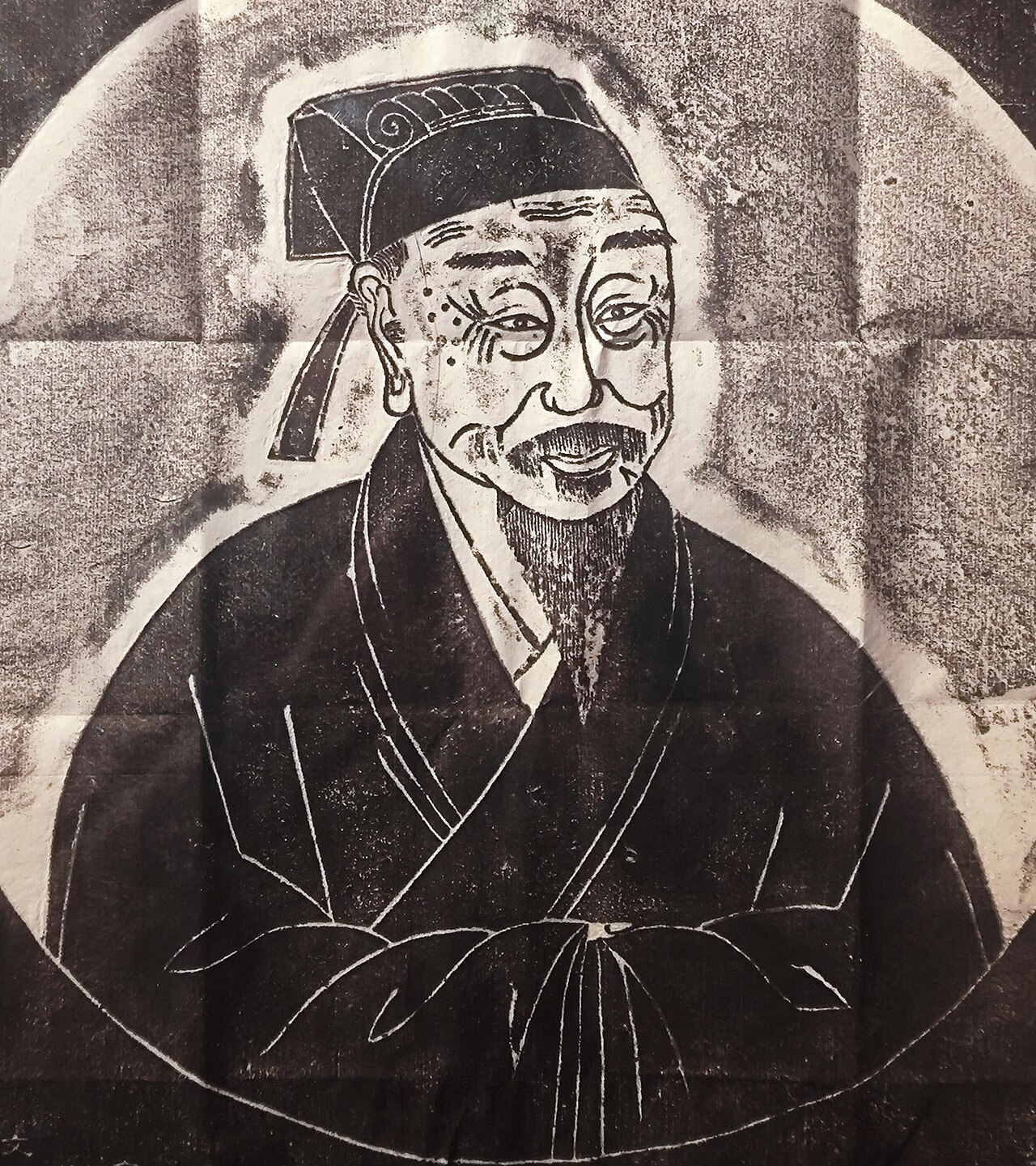
For another example, take the Huai Nan Zi (seen below lost in studies) written around 139 BCE (that is to say, 2,000 years after the initiating stories!). The legends of Yu, Yao and Shun are cited, establishing the foundational concepts of 治 (zhi), and then expanding on it. A couple quick examples here.
Classic of Fundamentals (verse 6)
舜之時,共工振滔洪水,以薄空桑,龍門未開,呂梁未發,江、淮通流,四海溟涬,民皆上丘陵,赴樹木。舜乃使禹疏三江五湖,開伊闕,導廛、澗,平通溝陸,流注東海,鴻水漏,九州幹,萬民皆寧其性,是以稱堯、舜以為聖。
In the time of Shun, Gonggong stirred up surging floods that threatened Kongsang. The Longmen Gorge had not yet opened; Lüliang had not yet been breached. Rivers such as Yangtze and Huai flowed together, merging into an oceanic expanse. People all climbed hills and trees for refuge. Shun then sent Yu to dredge the Three Jiangs and Five Lakes, open Yiqu, channel Chan and Jian rivers, level ditches and land, guiding waters toward the East Sea. The great floods receded; the Nine Provinces dried up; all people found peace in their nature—thus Yao and Shun were called sages (Legge translation)
Profound Evaluations (Miu Cheng Xun) (verse 17)
水下流而廣大,君下臣而聰明。君不與臣爭功,而治道通矣
Water flows downward and becomes vast; a ruler who humbles himself before his ministers gains wisdom; When a ruler does not contend with his ministers for credit, the path to good governance is clear. (Legge translation)
(Me? I think the last portion can appropriately be rendered as “applying zhi suzerainty flows, everywhere.”)
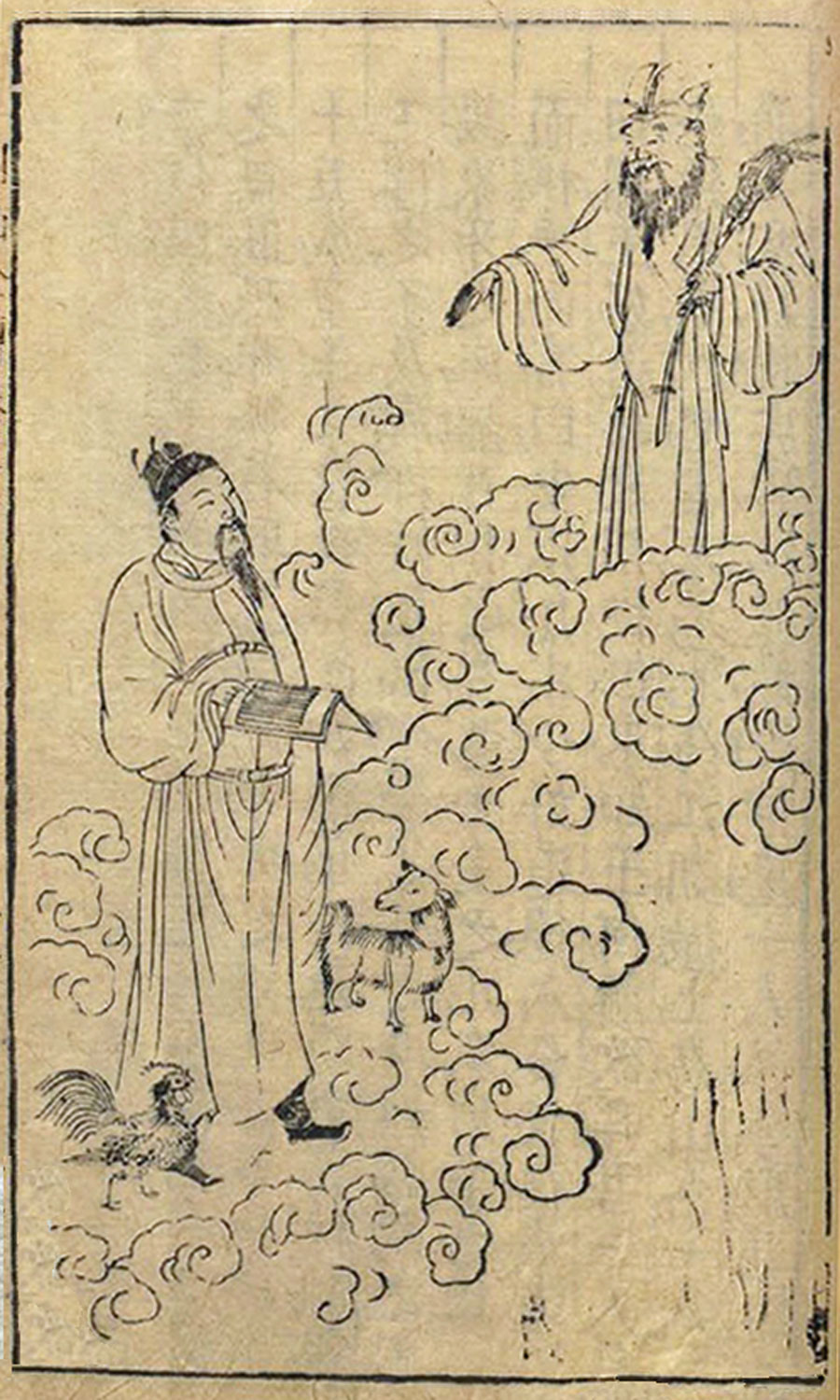
Zhu Xi, Nature of Human Character and the Nature of Constitution (40) (seen below)
孟子之論,盡是說性善。至有不善,說是陷溺,是說其初無不善,後來方有不善耳。若如此,卻似『論性不論氣』,有些不備
伯豐曰:「匡衡疏中說治性之道,亦是說氣質。」㽦謂:「『寬而栗』等,『而』下一字便是功夫。」先生皆然之
When there is something not good, Mencius speaks of it as being submerged (or drowned) this means that originally there was no lack of goodness, and only later did something not good arise. If so, it seems as if “discussing xing without discussing qi” is somewhat incomplete.
Bofeng said: “Kuang Heng’s commentary on the way of cultivating (or channeling) xing (the spirit) also refers to physical constitution and vital energy (qi).” Bing said: “In terms such as ‘broad yet cautious’ (‘kuan er li’), the character following ‘er’ indicates the effort or cultivation involved.” The master agreed with them all.
(Me? Here Zhu Xi (1100s, nearly 3,000 years from initial usage) highlights the link between personal channeling / cultivation, a literal fluid understanding and the efforts needed for the ability to lead.)
These are just a few examples to highlight the span of time, the consistency of the word and it’s principles. Here’s hoping we can make use of them, for their importance is made afresh in their modern application.